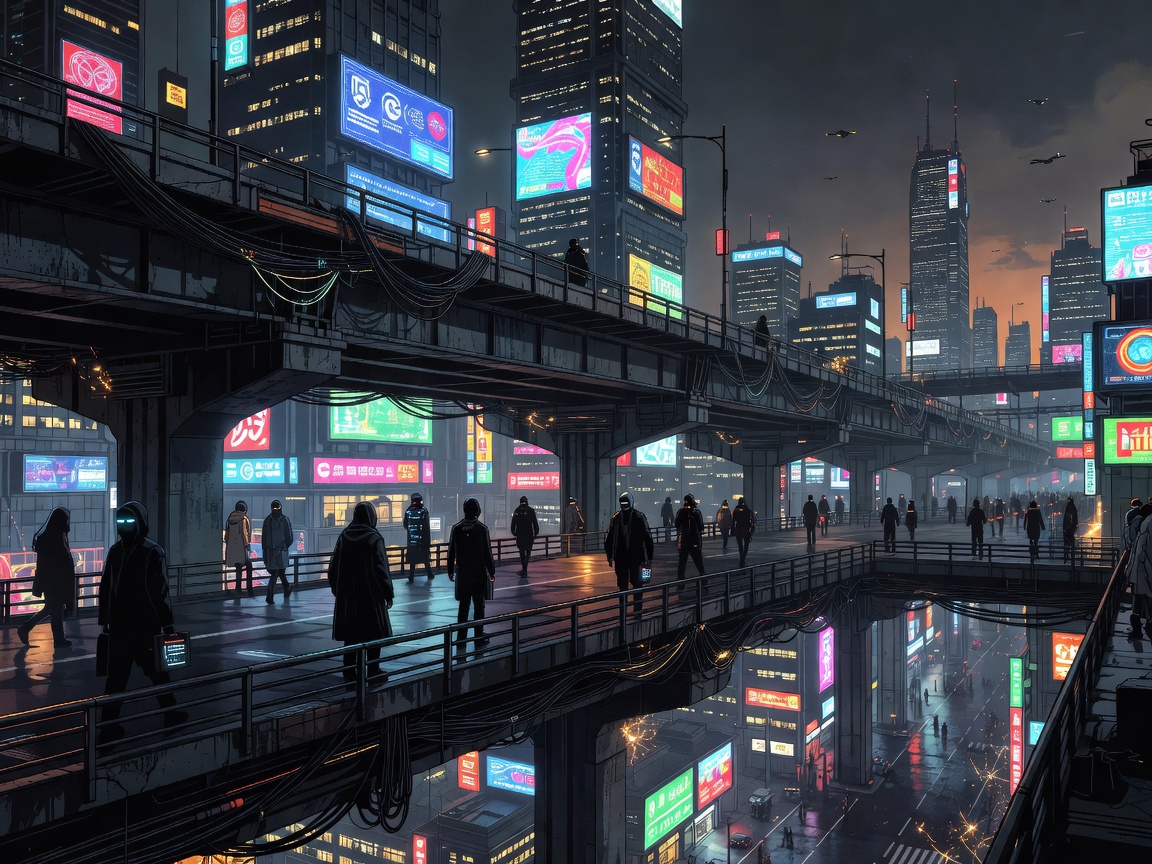
Noir in synthetic light
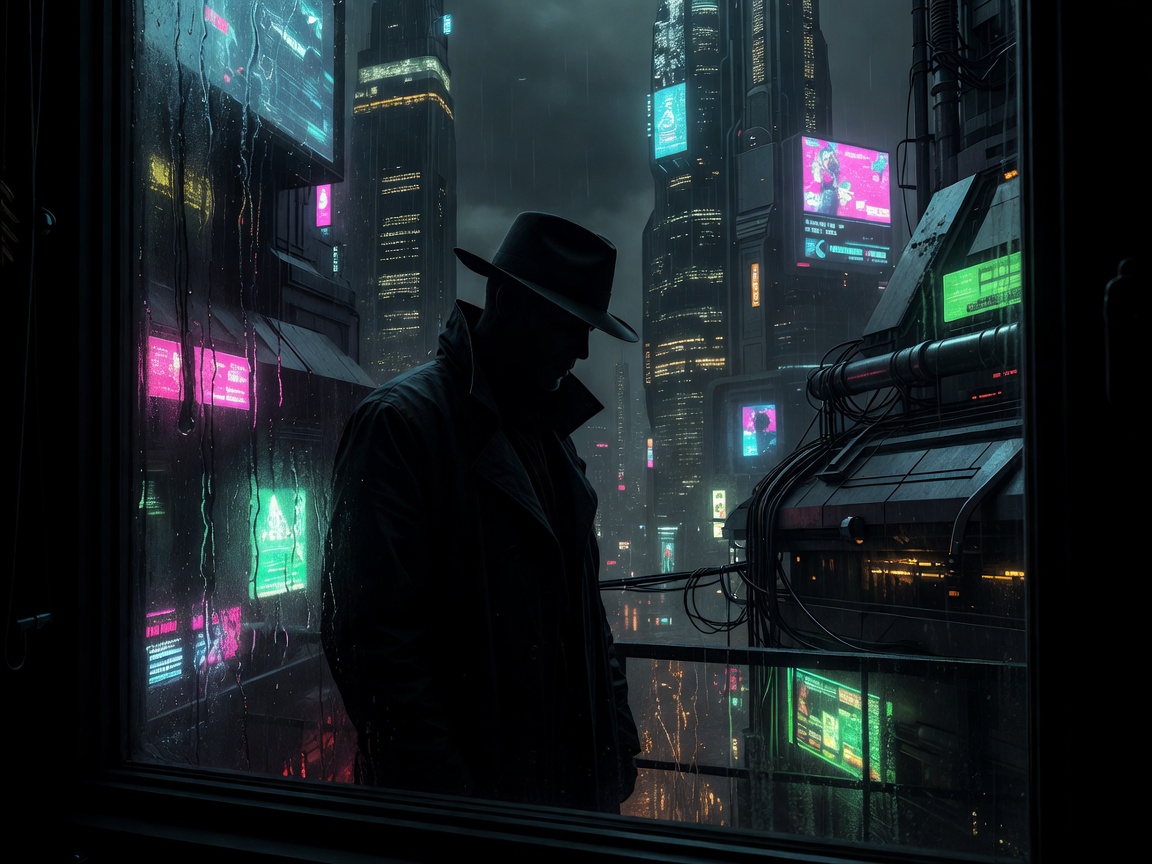
Blade Runner gave cyberpunk cinema one of its most recognisable silhouettes: the private-eye shadow stretched across a future city that feels old, wet and exhausted. Its power is not only the flying vehicles or the giant signs. It is the collision between noir fatalism and manufactured life. The detective story becomes a test of personhood. The city glows like a sales pitch, but every corridor seems to whisper about labour, ownership and memory.
That noir inheritance matters. Cyberpunk often borrows the investigator, the fugitive, the informant, the nightclub, the corrupt institution and the half-trusted witness. Yet it rewires them. The question is not simply who committed a crime. It becomes who defines a crime when corporations, police, laboratories and private security all claim authority. The camera lingers on smoke, rain and reflection because nobody in the frame is entirely transparent, including the systems that judge them.
Anime and the megacity body
Anime gave cyberpunk another voltage. Akira turns urban redevelopment, youth anger and bodily mutation into a blast of psychic overload. The city does not merely contain power; it cracks under it. Ghost in the Shell moves differently, cooler and more philosophical, asking what remains of selfhood when the body is replaceable, the mind is networked and identity can be copied, invaded or doubted. Both works show why animation suits cyberpunk so well: it can make architecture, technology and anatomy bend without pretending they are separate realms.
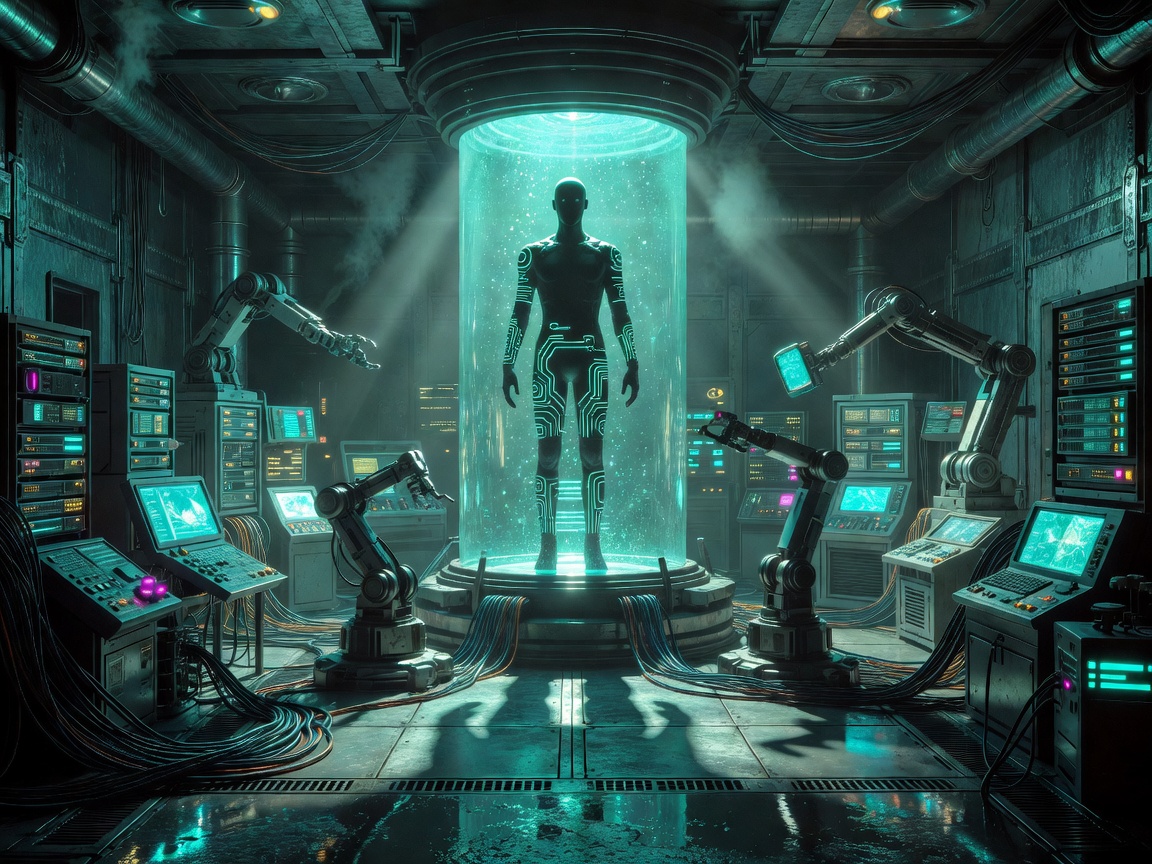
Japanese cyberpunk has often been more comfortable with transformation than with clean heroics. Metal, flesh, cables, uniforms, bikes, weapons and civic spaces slide into one another. The result can be beautiful, but it is rarely gentle. The image says that modern life has entered the nervous system. A city map becomes a circulatory chart. A police unit becomes an organ. A school, laboratory or stadium becomes a pressure valve. The spectacle gleams, then it bites.
Hollywood shine versus street abrasion
Not every screen work uses the same texture. Some favour polished future-noir: sculpted light, smooth glass, controlled pacing and grand philosophical questions. Others embrace grime: handheld urgency, cheap rooms, overloaded streets, old machines and clothing that looks repaired rather than designed. The first mode can make cyberpunk monumental, turning every skyline into a cathedral of power. The second keeps the genre close to rent, hunger, noise and improvisation.
The trade-off is clarity. Polished films can become too elegant, making oppression look expensive enough to admire without discomfort. Grittier works can become so chaotic that their politics blur into mood. The strongest screen cyberpunk holds both: beauty sharp enough to lure the eye, and a social wound clear enough to stop the image becoming decoration. Neon should not simply flatter the frame. It should reveal what daylight has failed to fix.
Recurring images that do real work
Rain is never just rain. On screen, it smears signs, blurs surveillance, turns streets into mirrors and makes the city feel both intimate and unreachable. Eyes matter too: artificial eyes, scanned eyes, watched eyes, eyes hidden behind visors. They carry the genre’s obsession with seeing and being seen. Elevators, corridors and checkpoints compress bodies into controlled movement. Billboards enlarge desire until it becomes architecture. Crowds offer anonymity, but also show how easily a person can disappear inside a system.
Music and sound design complete the pressure. Vangelis-style synth melancholy, industrial percussion, club bass, machine drones and moments of cold quiet all carry different meanings. A city that never stops sounding can feel alive or inescapable. A silent laboratory can feel more violent than an explosion. Cyberpunk screen language works when image and sound agree on the same unease: the future is not far away; it is wrapped around the face.
How to watch cyberpunk well
Watch the background as carefully as the hero. Who cleans the rooms? Who advertises? Which languages, uniforms and interfaces appear in public space? Are the poor shown as people with networks and humour, or only as grime for the hero to cross? Does the story treat artificial beings as props, threats, labourers, citizens or mirrors? Those questions cut through surface imitation.
A cyberpunk film or anime does not need every classic ingredient. It can lack rain, trench coats or flying cars and still belong if it understands the deeper current: technology entangled with control, identity made unstable, and resistance forced to move through the same systems it wants to escape.