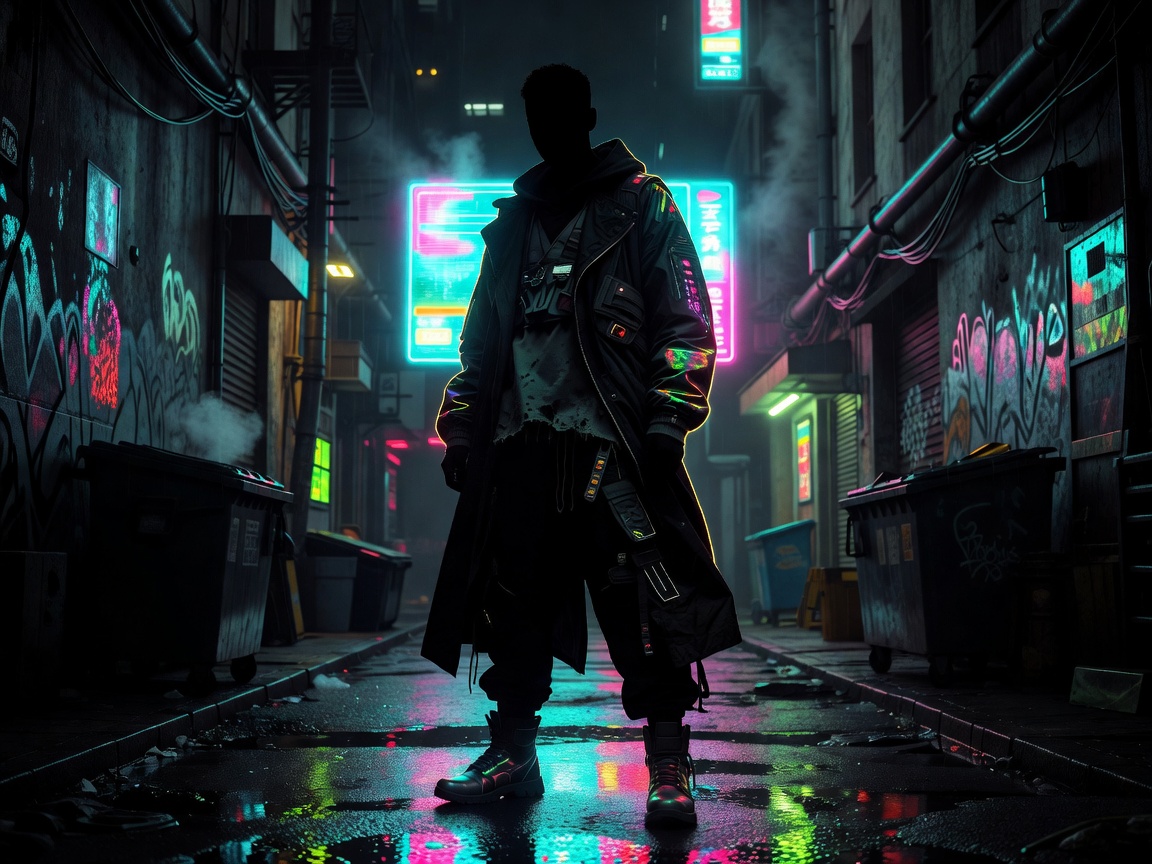
The palette: bruise, signal, warning
Cyberpunk colour usually starts with darkness, but darkness alone is not the point. The genre needs contrast: cyan like instrument glare, magenta like a nightclub wound, acid yellow like a warning label, red like an alarm, green like an old terminal refusing to die. These colours should feel emitted rather than painted. They come from signs, screens, vehicles, vending machines, scanners and emergency systems. That is why they look strongest against concrete, rain, smoke, plastic, skin and black glass.
The danger is turning cyberpunk into a wallpaper filter. Neon without social texture becomes decoration. The colour needs a source and a job. A sign sells something. A scanner excludes someone. A screen records, demands, distracts or misleads. Even in illustration or web design, the glow should imply infrastructure. The city is full of light because every surface is trying to communicate, extract or command.
Clothing: streetwear under pressure
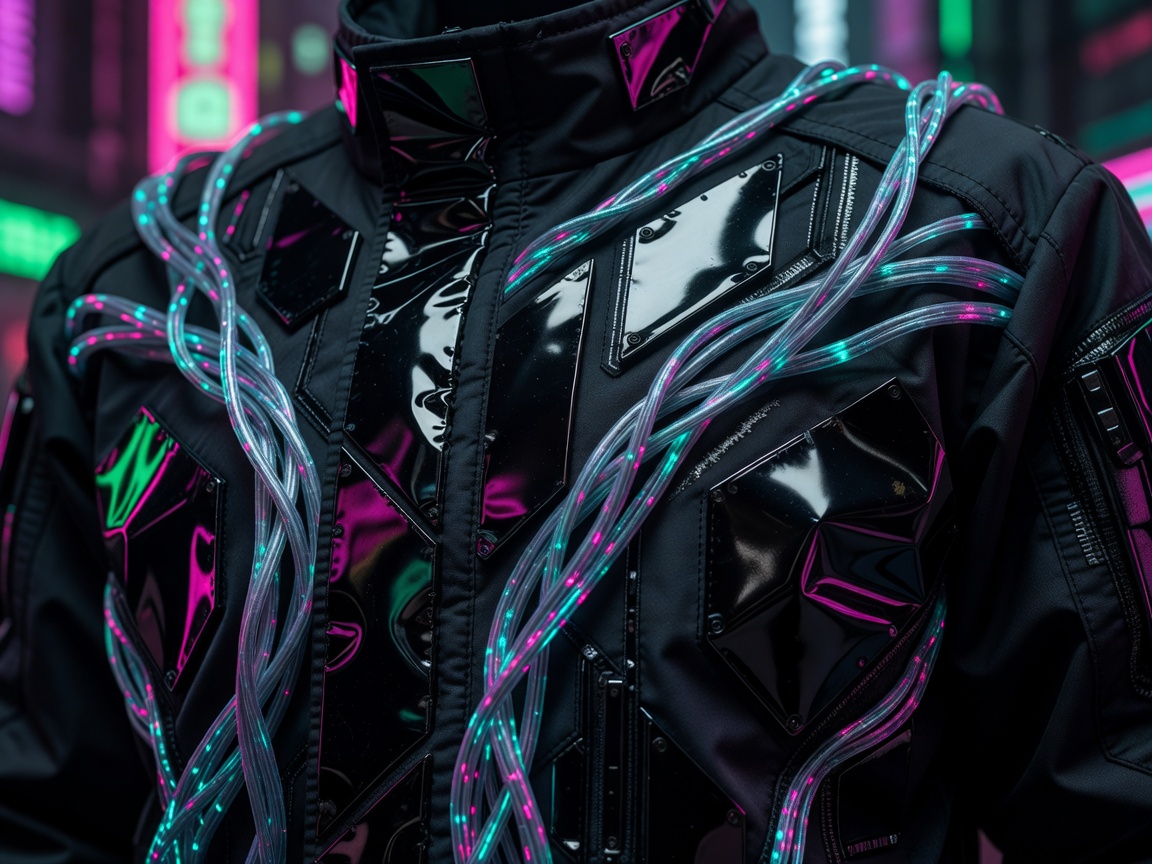
Cyberpunk fashion draws from punk, goth, techwear, military surplus, motorcycle gear, workwear, club culture and streetwear. The useful question is not “does it look futuristic?” but “what problem does it appear to solve?” Layered jackets suggest weather and concealment. Straps and modular pockets suggest carrying tools. Heavy boots suggest hostile streets. Reflective panels suggest visibility in traffic or deliberate spectacle. Masks, hoods and visors carry questions of anonymity, filtration and surveillance.
Too much smoothness weakens the look. A world of perfect armour and spotless coats slides toward superhero fantasy. Cyberpunk prefers scuffs, repairs, mismatched fabrics, visible seams and improvised combinations. High technology sits beside cheap plastic. A premium implant may be worn with second-hand trousers. That clash is the genre’s pulse: the future distributed unevenly, glittering in one place and patched with tape in another.
Music: machines with a pulse
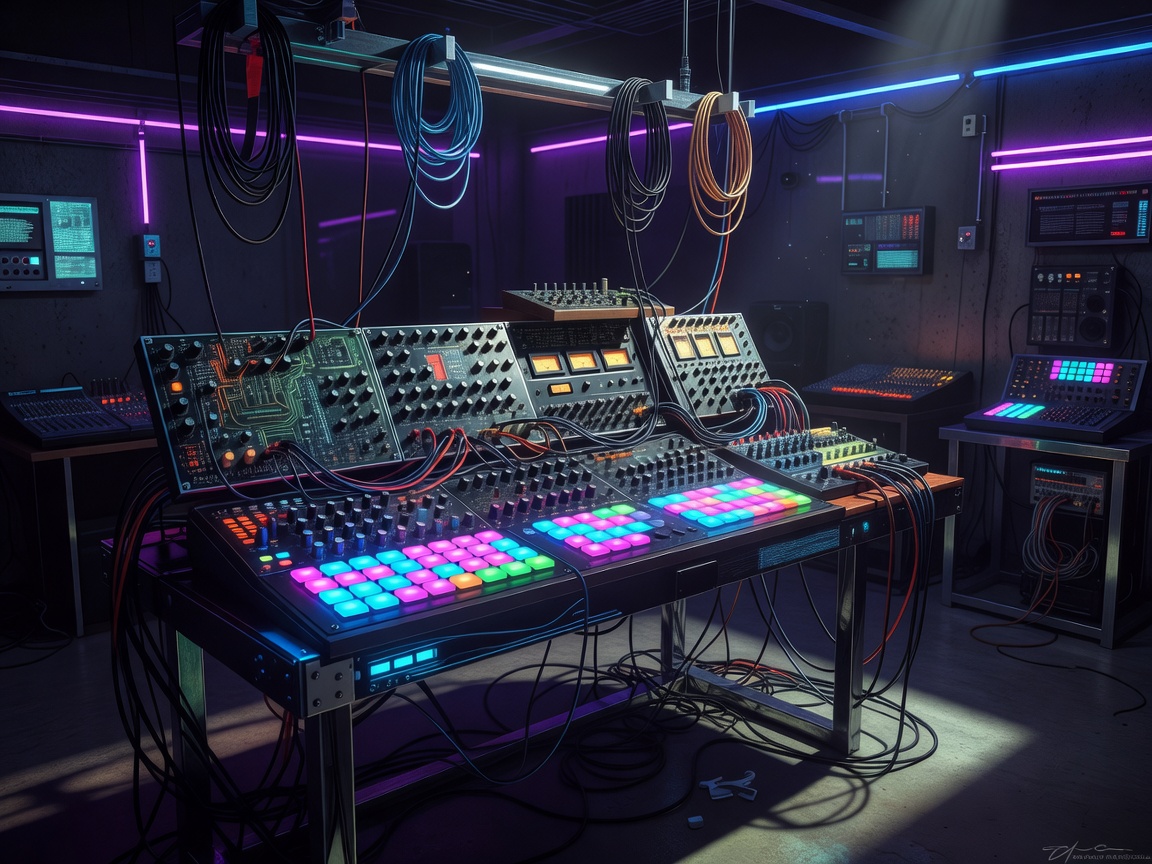
Cyberpunk sound often lives between synthwave, industrial, techno, dark ambient, electro, noise and film-score melancholy. The bright retro arpeggio gives one flavour: glossy night drive, memory of obsolete futures, chrome nostalgia. Industrial percussion gives another: factory rhythm, body impact, metal pressure. Dark ambient makes the city feel enormous and indifferent. Club music turns the network into a crowd, bodies moving under systems they cannot fully see.
For games and films, sound must serve place. A corporate lobby may hum with expensive restraint. A street market may stack radios, drones, engines and voices. A hacker’s room may sound dry, close and overloaded. Silence can be cyberpunk too, especially when it follows too much signal. The key is texture. Clean electronic music alone can feel weightless; cyberpunk wants electricity with dust in it.
Typography, interfaces and graphic noise
The visual language favours monospace type, condensed display faces, pixel forms, warning labels, scanlines, grids, barcodes, circuit traces and diagnostic overlays. But readable design still matters. If every line screams, nothing carries meaning. Good cyberpunk graphics use hierarchy: a brutal headline, a restrained body text, small technical labels, deliberate glitches, and enough quiet space for the eye to recover.
Interfaces should reveal power. A corporate system might be sterile, locked and over-branded. A street terminal might be layered, multilingual, patched and half-broken. A hacker interface might be abstract, but it should still feel like a tool rather than magic smoke. The best interface design in the genre makes control visible: permissions, denials, traces, maps, warnings, access tiers and failed connections.
Using the aesthetic without flattening it
For posters, rooms, websites, illustration or fashion moodboards, begin with function. What is being sold, watched, repaired, hidden or hacked? Then build the look around that answer. Mix surfaces: matte fabric beside glossy plastic, old concrete beside luminous acrylic, cheap signage beside sealed corporate glass. Keep the human scale in view. A city of towers needs alleys, laundries, kiosks, lifts, cables, benches and bedrooms.
Cyberpunk style becomes powerful when beauty and discomfort occupy the same frame. The glow attracts; the grit explains. The result should feel like a promise overheated until it becomes a warning.